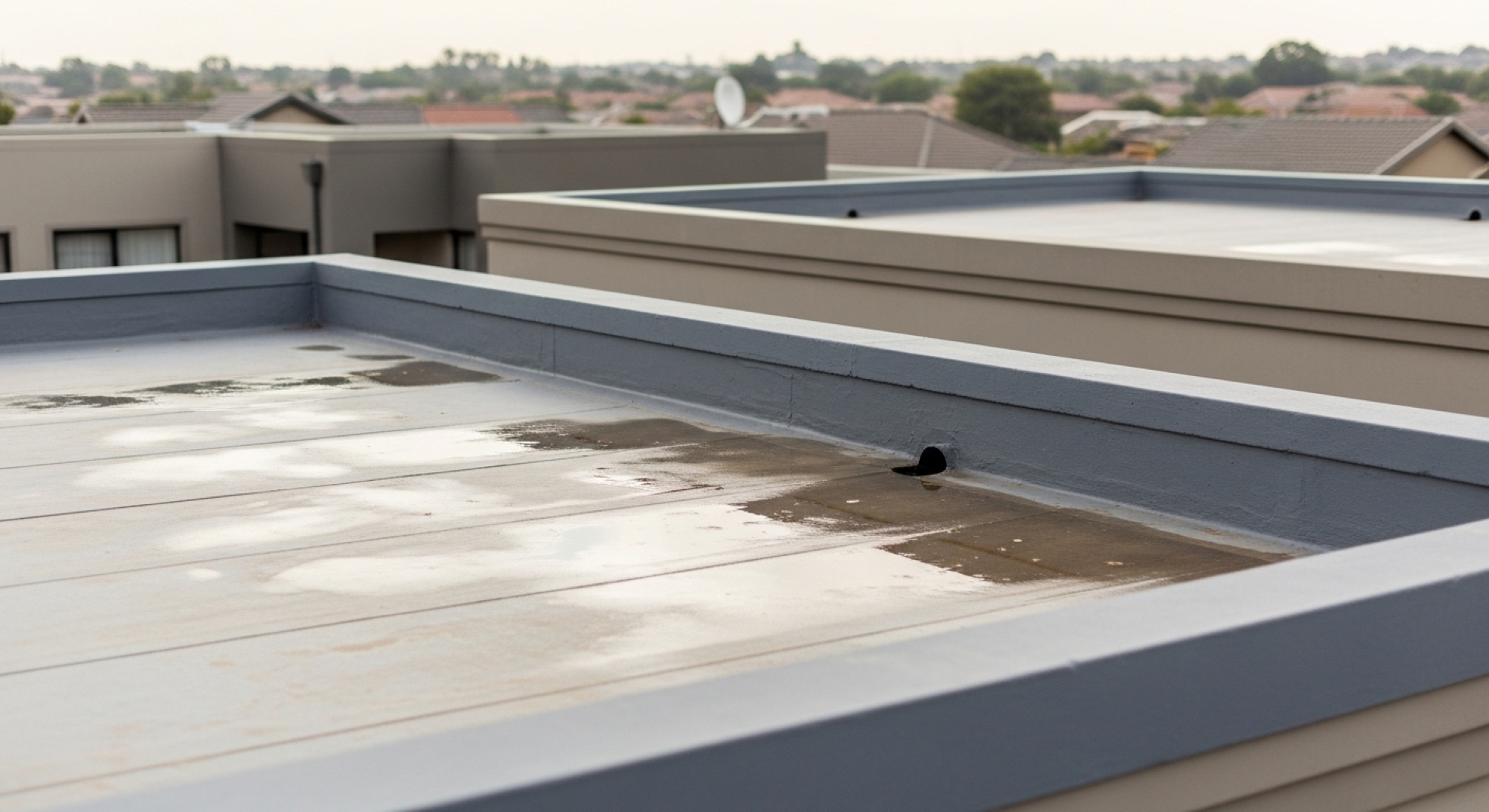
Why Residential Waterproofing Fails – And How to Prevent Costly Damage
Waterproofing is one of the most overlooked aspects of residential property maintenance — until it fails. When water ingress starts affecting ceilings, walls, or structural elements, the repair costs escalate rapidly.
In South African homes, especially across Gauteng, waterproofing failures are commonly caused by aging materials, poor installation, and deferred maintenance. Understanding why waterproofing fails is the first step toward preventing expensive damage.
Common Reasons Residential Waterproofing Fails
1. Aging and UV Degradation
Most waterproofing systems are not designed to last forever. Continuous exposure to harsh sunlight causes membranes and coatings to dry out, crack, and lose elasticity. Once flexibility is lost, water ingress becomes inevitable.
2. Poor Surface Preparation
One of the most common installation mistakes is applying waterproofing over dirty, damp, or unstable surfaces. Adhesion failure often occurs months later, leading to peeling membranes and leaks.
3. Incompatible Materials
Mixing different waterproofing products without proper compatibility testing often leads to premature failure. Each system is designed to work as a complete solution, not in isolation.
4. Blocked Drainage
Flat and low-slope roofs rely heavily on effective drainage. When outlets are blocked by debris, standing water accelerates membrane breakdown and forces moisture into joints and seams.
5. Deferred Maintenance
Small cracks and minor defects rarely cause immediate leaks, which leads homeowners to ignore them. Over time, these small issues compound into widespread damage.
Warning Signs Homeowners Should Never Ignore
- Damp or bubbling paint on ceilings
- Hairline cracks along parapets or roof edges
- Musty smells after rainfall
- Water pooling on flat roof sections
- Interior mold near rooflines
These early indicators often appear months before visible leaks develop.
Preventing Waterproofing Failure
Schedule Routine Inspections
Annual roof and exterior inspections identify vulnerabilities before they escalate.
Address Drainage Immediately
Clearing outlets and improving runoff dramatically extends membrane lifespan.
Use System-Based Waterproofing Solutions
Complete systems — primers, membranes, sealants — ensure compatibility and performance.
Avoid Temporary Patch Repairs
Short-term fixes often trap moisture and accelerate long-term damage.
Long-Term Value of Proper Waterproofing
Professional waterproofing protects structural elements, prevents mold growth, improves energy efficiency, and preserves property value. In residential environments, proactive waterproofing is always more cost-effective than reactive repairs.
Final Thoughts
Residential waterproofing failures are rarely sudden. They are the result of ignored warning signs and deferred maintenance. With the right approach, homeowners can avoid unnecessary damage and protect their properties for years to come.
Article Classification
Senior Professional
Specialized technical insights from our structural engineering and commercial construction division.