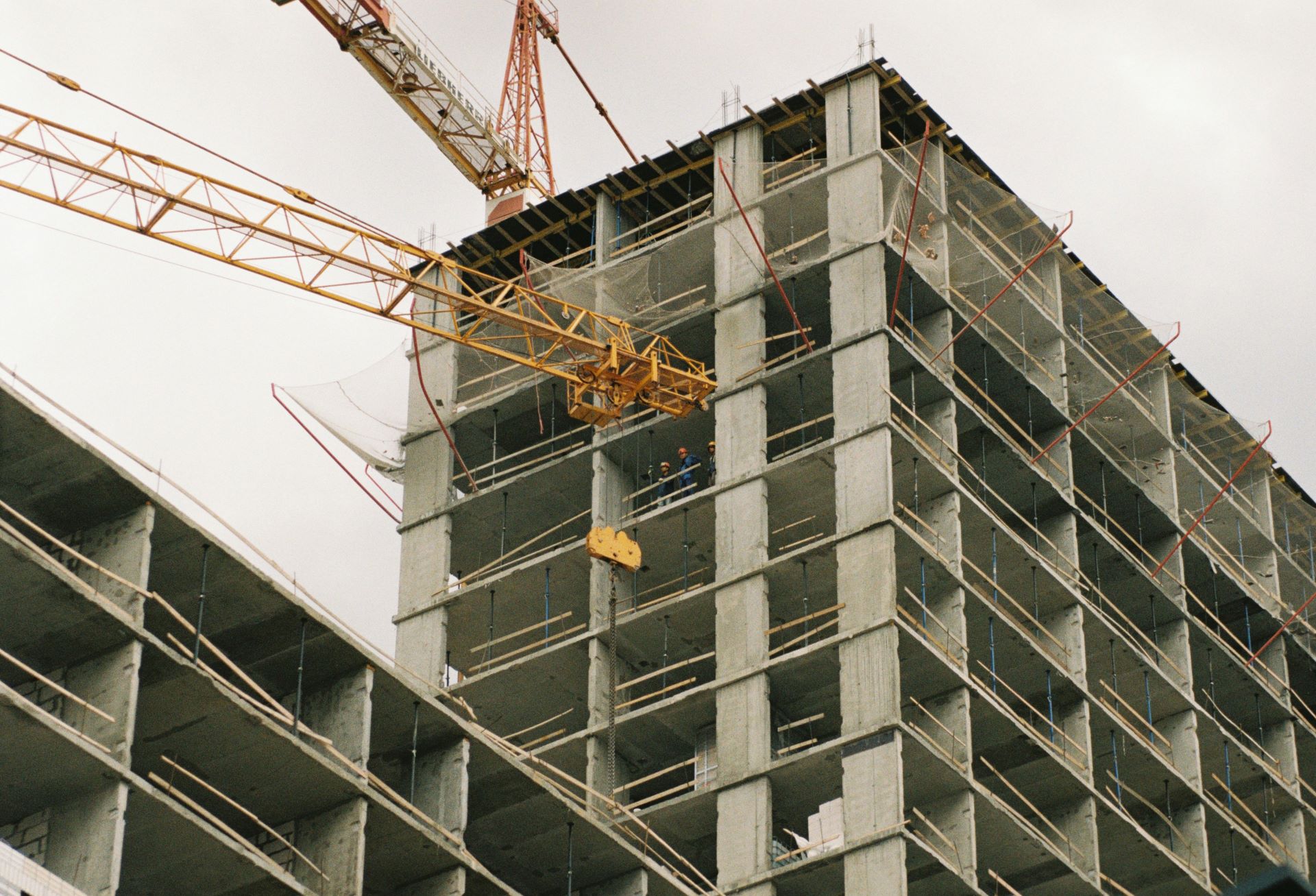
Structural Inspections Prevent Building Collapse Risk
The Quiet Mechanics Behind Structural Safety
Buildings rarely fail suddenly without warning. In most cases, structural collapse is not an instant event but the final chapter in a long, silent story of deterioration. That story is written in hairline cracks that widen over time, in corroding reinforcement hidden beneath concrete, and in small deflections that go unnoticed until they become irreversible.
Structural inspections are the discipline that reads this story early. They translate subtle physical changes into actionable insight, giving engineers and property owners the chance to intervene before damage becomes catastrophic. In environments like South Africa, where climate variation, coastal corrosion, and aging infrastructure intersect, this early detection role becomes even more critical.
Risk mitigation in construction is not only about designing strong buildings. It is about ensuring those buildings remain strong throughout their lifespan. Inspections are the mechanism that keeps design intent alive in the real world.
Why Structural Collapse Rarely Happens Without Warning
The idea of a sudden structural collapse is dramatic, but in practice, it is almost always preceded by measurable degradation. Materials behave predictably under stress. Steel corrodes gradually when exposed to moisture and oxygen. Concrete loses integrity when microcracks allow water ingress. Timber weakens when fungal decay spreads through untreated sections.
These processes are slow, but relentless.
What makes them dangerous is not their speed but their invisibility to the untrained eye. A ceiling may still look intact while the beams above it are already compromised. A façade may appear stable while internal reinforcement is already losing load-bearing capacity.
Structural inspections exist to expose these hidden failures before they escalate. They provide a controlled interruption in the building’s lifecycle, where specialists examine what everyday use conceals.
The Role of Inspections in Risk Mitigation Strategy
Risk mitigation in the built environment is fundamentally about reducing uncertainty. Every structure carries a level of risk influenced by age, design load, environmental exposure, and maintenance history. Inspections reduce this uncertainty by converting unknown conditions into documented reality.
A well-executed inspection does more than identify visible defects. It evaluates patterns of deterioration, identifies systemic weaknesses, and predicts future failure points. This forward-looking aspect is what makes inspections a cornerstone of preventative maintenance strategies.
In commercial buildings, especially, inspections support financial risk management as much as physical safety. Early intervention is consistently more cost-effective than emergency repair or post-failure reconstruction. A single overlooked defect in a load-bearing column can escalate into widespread structural compromise, multiplying repair costs exponentially.
Risk mitigation is therefore not reactive. It is observational, continuous, and deeply dependent on inspection discipline.
Common Structural Weak Points Found During Inspections
While every building is unique, structural inspections repeatedly uncover similar vulnerability zones. These weak points often emerge due to environmental exposure, design limitations, or maintenance neglect.
One of the most common issues is reinforcement corrosion in concrete structures. When moisture penetrates concrete, it reaches the steel reinforcement inside. As steel corrodes, it expands, causing internal pressure that leads to cracking and spalling.
Roof structures frequently show early signs of stress due to water ingress, thermal expansion, and wind loading. Small leaks can gradually weaken timber trusses or steel purlins, especially when left unaddressed over multiple seasons.
Foundations can also develop issues related to soil movement or poor drainage. In regions with variable rainfall patterns, soil expansion and contraction can subtly shift load distribution, creating stress concentrations that are not immediately visible above ground.
Façade systems, particularly in older commercial buildings, may experience anchoring fatigue. This is often the result of long-term vibration, wind load cycling, and material fatigue in fasteners or brackets.
Each of these issues demonstrates a critical truth. Structural failure rarely begins where it finally appears.
How Inspections Detect Problems Before They Escalate
Modern structural inspections combine visual assessment with technical diagnostics. While a trained engineer can identify surface-level defects, deeper analysis often requires measurement tools and non-destructive testing methods.
Crack mapping is one of the most fundamental techniques. By documenting crack width, direction, and progression, inspectors can distinguish between harmless surface shrinkage and signs of structural movement.
Moisture detection tools help identify hidden water ingress within walls, ceilings, and flooring systems. Moisture is often the first trigger in a chain reaction that leads to corrosion, decay, and eventual structural weakening.
Load testing and deflection measurement provide insight into whether structural members are performing within safe limits. Even slight deviations from expected performance can indicate early-stage fatigue.
Thermal imaging is increasingly used to identify anomalies in building envelopes. Temperature inconsistencies can reveal insulation failure, trapped moisture, or voids within structural assemblies.
The goal of all these methods is the same. They convert uncertainty into measurable data, allowing engineers to act before minor issues evolve into systemic failure.
South African Environmental Factors and Structural Stress
South Africa presents a unique combination of environmental stressors that directly influence structural integrity. Coastal regions face high levels of salt exposure, which accelerates steel corrosion in reinforced concrete and exposed metal structures.
In inland regions, temperature fluctuations can be extreme, leading to repeated expansion and contraction cycles in building materials. Over time, these cycles contribute to fatigue in joints, fasteners, and load-bearing connections.
Heavy seasonal rainfall in certain provinces introduces additional risk through water ingress and soil saturation. Poor drainage around foundations can gradually undermine structural stability without immediate visual indicators.
Urban environments add another layer of complexity. Constant vibration from traffic, construction activity, and industrial operations can contribute to micro-movements within structures. While individually insignificant, these movements accumulate over years.
Structural inspections in this context are not optional maintenance activities. They are adaptive responses to environmental reality.
The Financial Logic Behind Early Detection
One of the most overlooked aspects of structural inspections is their economic value. Property owners often view inspections as an operational cost, rather than a risk avoidance investment.
However, the financial logic is straightforward. The cost of repairing early-stage damage is typically a fraction of the cost of repairing advanced structural failure. In many cases, early intervention can prevent secondary damage to electrical systems, interiors, and operational equipment.
For commercial properties, downtime is another critical factor. Structural failure or emergency repairs can result in extended closure periods, lost revenue, and contractual penalties. Inspections reduce the likelihood of unplanned disruption by identifying issues in advance.
Insurance considerations also come into play. Documented inspection records can influence risk assessments and claims processes, particularly in large-scale commercial infrastructure.
Viewed through this lens, inspections are not overhead. They are risk hedging instruments embedded within the lifecycle of the building.
The Human Factor in Structural Risk
While materials and environmental conditions play a major role in structural integrity, human behaviour is often the deciding factor in whether early warning signs are addressed or ignored.
Deferred maintenance is one of the most common contributors to structural deterioration. Small issues are frequently postponed due to budget constraints or operational inconvenience. Over time, these small issues compound into significant structural risks.
Another factor is misinterpretation of warning signs. Not all cracks are harmless, and not all water stains are cosmetic. Without professional evaluation, it is easy to underestimate the severity of early indicators.
There is also the issue of inspection frequency. Many buildings are inspected only when required by regulation or during property transactions. This creates long gaps where deterioration can progress unchecked.
A proactive inspection culture shifts this dynamic. It encourages regular evaluation, timely intervention, and a mindset where maintenance is continuous rather than episodic.
Building Lifecycle Thinking and Long-Term Stability
Every building has a lifecycle that extends far beyond its construction phase. Design, construction, occupation, maintenance, and eventual decommissioning all form part of a continuous structural narrative.
Inspections sit at the intersection of these phases. They ensure that performance aligns with original design expectations and that deviations are identified early enough to correct.
Lifecycle thinking reframes structural safety as an ongoing responsibility rather than a static achievement. A building is not simply built once and left to exist. It is actively managed over time.
In this context, inspections become a form of communication between the original engineering intent and the current physical reality of the structure.
The Future of Structural Inspection Practices
Structural inspection methods are evolving rapidly. Digital modelling, sensor integration, and predictive analytics are increasingly being used to supplement traditional inspection techniques.
Smart sensors embedded within structures can monitor stress, vibration, and moisture levels in real time. This allows for continuous monitoring rather than periodic assessment.
Drones are also expanding the reach of inspections, making it possible to assess high-rise façades, roofs, and inaccessible areas with greater safety and efficiency.
Predictive maintenance models use historical data and live readings to forecast potential failure points before they become visible. This represents a shift from reactive inspection to anticipatory risk management.
Despite these advancements, the role of the structural engineer remains central. Technology enhances visibility, but interpretation still depends on expertise.
Conclusion: Early Detection as Structural Insurance
Structural inspections are not simply technical procedures. They are a form of insurance against uncertainty, deterioration, and failure.
In environments where buildings are exposed to environmental stress, aging materials, and constant use, early detection becomes the most powerful tool available for preserving structural integrity.
The principle is simple. When problems are identified early, they remain manageable. When they are ignored, they evolve into risk.
In the language of construction risk management, inspections are the difference between maintenance and catastrophe.
Article Classification
Senior Professional
Specialized technical insights from our structural engineering and commercial construction division.