
Seven misconceptions about maintaining a commercial property portfolio
Seven misconceptions about maintaining a commercial property portfolio
Managing one building is already a coordination task. Managing several properties adds different tenants, access rules, operating hours, maintenance histories and people authorised to approve work. A small defect at one site can be easy to overlook when requests arrive from several directions at once.
The answer is not to treat every property identically or to arrange a separate emergency visit for every minor concern. A useful portfolio approach makes the differences visible: what each building needs, who uses it, what is urgent and what can be grouped into planned work.
Several common assumptions can get in the way. Here are seven misconceptions to question when planning general maintenance and handyman work across commercial properties.
1. “A small defect can always wait”
A loose fitting or damaged finish is not automatically an emergency. Its priority depends on its location, how the space is used and the consequences of deterioration. A loose handle on a rarely used cupboard may be suitable for a planned visit; a damaged door at a busy entrance may have a more immediate operational or security impact.
The visible size of a defect is not a reliable measure of its cause. A small stain may be cosmetic, or it may warrant investigation because it is growing. A door that rubs could need adjustment, but the cause should be assessed rather than assumed. The person reporting an issue should describe what they observe and whether it is changing.
Use a simple triage process. Separate urgent safety concerns and active damage from routine work and items to monitor. Identify who makes that decision and how it is escalated when conditions change. If a situation involves exposed electrical equipment, an unstable ceiling or another immediate hazard, keep people away and arrange appropriate professional assistance.
A planned list works best when it is reviewed. A defect placed in a future maintenance batch should not remain there indefinitely if its impact increases. Give each item an owner, an expected next action and a review date appropriate to the property.
2. “All buildings can share the same schedule”
A portfolio can use a common reporting process without imposing the same maintenance interval on every asset. A busy public-facing property, a lightly occupied office and a warehouse experience different patterns of use. Age, materials, exposure, previous alterations and access arrangements also vary.
Start with an inventory that identifies the building, responsible contact and major maintainable elements. Record what is known about condition and history. If information is missing, mark it as unknown. A contractor or specialist can help establish what further assessment is appropriate rather than filling gaps with guesses.
Ask the people who use each site about the issues they see. A facilities contact may know that a particular door is used constantly during deliveries, while the portfolio owner sees only a quarterly report. Local information helps distinguish an isolated complaint from a pattern that deserves attention.
Use common categories for reporting so that requests can be compared across sites, but allow the response to reflect each building. A schedule should be revised when usage changes or professional advice identifies a different need. A copied calendar is not evidence that the work is suitable.
3. “The cheapest call-out always costs less”
A call-out price is only one part of the cost. The final amount may also reflect travel, access, assessment, materials, return visits, after-hours work and making good. One provider may include these items while another prices them separately. The difference does not make either proposal wrong, but it matters when comparing them.
Request a written scope appropriate to the job. Identify which items will be inspected or repaired, whether materials are included and what happens if the required part is unavailable. If the cause is uncertain, a separate diagnostic visit can be a reasonable first step. Agree how the result will be reported and how further work will be approved.
For several routine tasks at the same property, grouping work may reduce repeated mobilisation. Grouping tasks across nearby buildings may also be practical, depending on access and scheduling. Do not use batching to delay an urgent hazard or ask a general handyman to perform work requiring a specialist.
Compare the effect on occupants as well as the invoice. A short visit that interrupts a customer entrance at the busiest time may carry a different business cost from the same work scheduled during a quieter period. The client and contractor need enough information to make that trade-off deliberately.
4. “A photograph tells the contractor everything”
A photograph can show a location, visible damage and the type of fitting involved. It may help a provider prepare questions or bring suitable equipment. It cannot reliably show what is behind a wall, whether a frame has moved or why a fitting keeps failing.
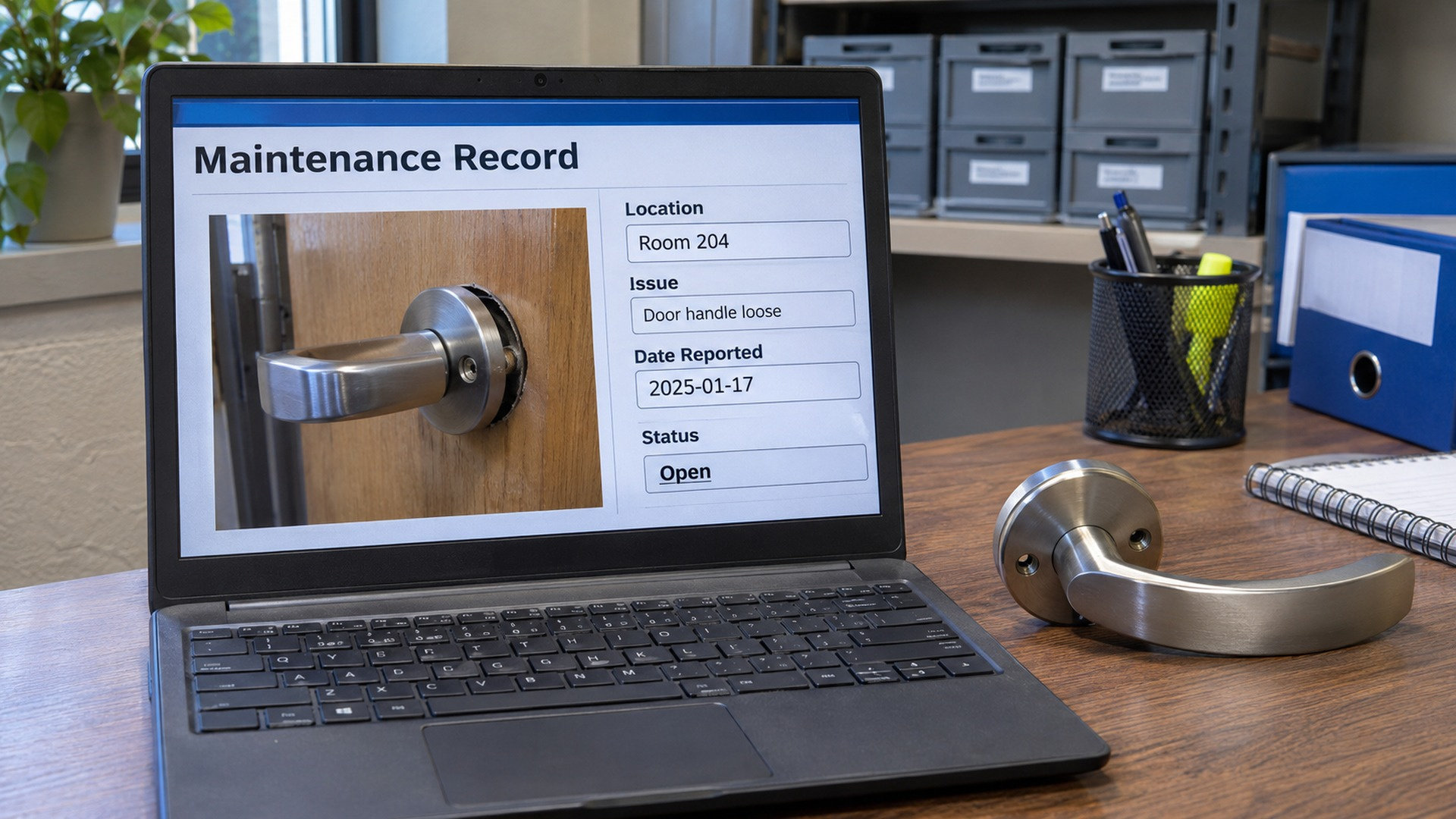
Pair a wide photograph with a close view when it is safe to do so. Add the building, room, date and a short description of the effect on use. For example, “the meeting-room door catches on the lower corner and has become harder to close this week” is more informative than an unlabelled picture of the door.
Do not ask occupants to enter unsafe areas, open electrical enclosures or disturb suspect materials to obtain a better photograph. A report of water near electrical equipment, damaged wiring or a potentially unstable component should be escalated to the appropriate qualified person.
When the contractor responds, distinguish what has been observed from what remains to be investigated. A preliminary estimate based on photographs may need revision after access is obtained. The quotation should explain that uncertainty and the process for approving a change.
5. “A handyman can cover every trade”
General maintenance can include many useful minor repairs, but a small task is not necessarily an unregulated task. Electrical installation work and other specialised activities require the appropriate competence, registration or authorisation. Structural concerns, gas, significant plumbing work and hazardous materials may also need specialist assessment.
The Department of Employment and Labour's electrical installation notice advises using competent, legally registered electrical contractors. Ask who will perform any electrical work, who is responsible for inspection and testing where required, and what documentation will be provided.
A good general-maintenance provider should be able to identify when a task falls outside its agreed scope. For example, a damaged cabinet may be a straightforward repair until an active water problem or an electrical component is discovered behind it. The appropriate response is to make the area safe and involve the relevant specialist before restoring finishes.
In a portfolio, record the boundary between services. The person approving a job should know whether the quoted price includes a specialist subcontractor, separate assessment or only the general repair. Clear scope avoids asking the wrong person to improvise and helps the owner understand the likely sequence.
6. “A completed job needs no handover”
A maintenance request should close with enough information for the next person to understand what happened. The level of detail can be proportionate. A minor handle adjustment may need a short note; a more complex job may require product information, invoices, testing records or specialist documentation.
Record the original symptom, the work performed, the date and any remaining issue. If a replacement part was used, keep its details where they are relevant to future maintenance. If the contractor could not establish the cause or recommended observation after completion, record that uncertainty rather than marking the matter permanently resolved without context.
Check the result against the agreed scope. Does the door operate as intended? Is the fitting secure? Has the work area been left usable and waste removed as agreed? A building representative can inspect the visible result, while matters requiring professional testing remain with the appropriate specialist.
For a portfolio manager, a consistent handover format makes it easier to compare recurring issues and costs. It also helps when staff or tenants change. A concise record linked to a location is more useful than a stack of unlabelled invoices stored separately from the original request.
7. “More software automatically means better maintenance”
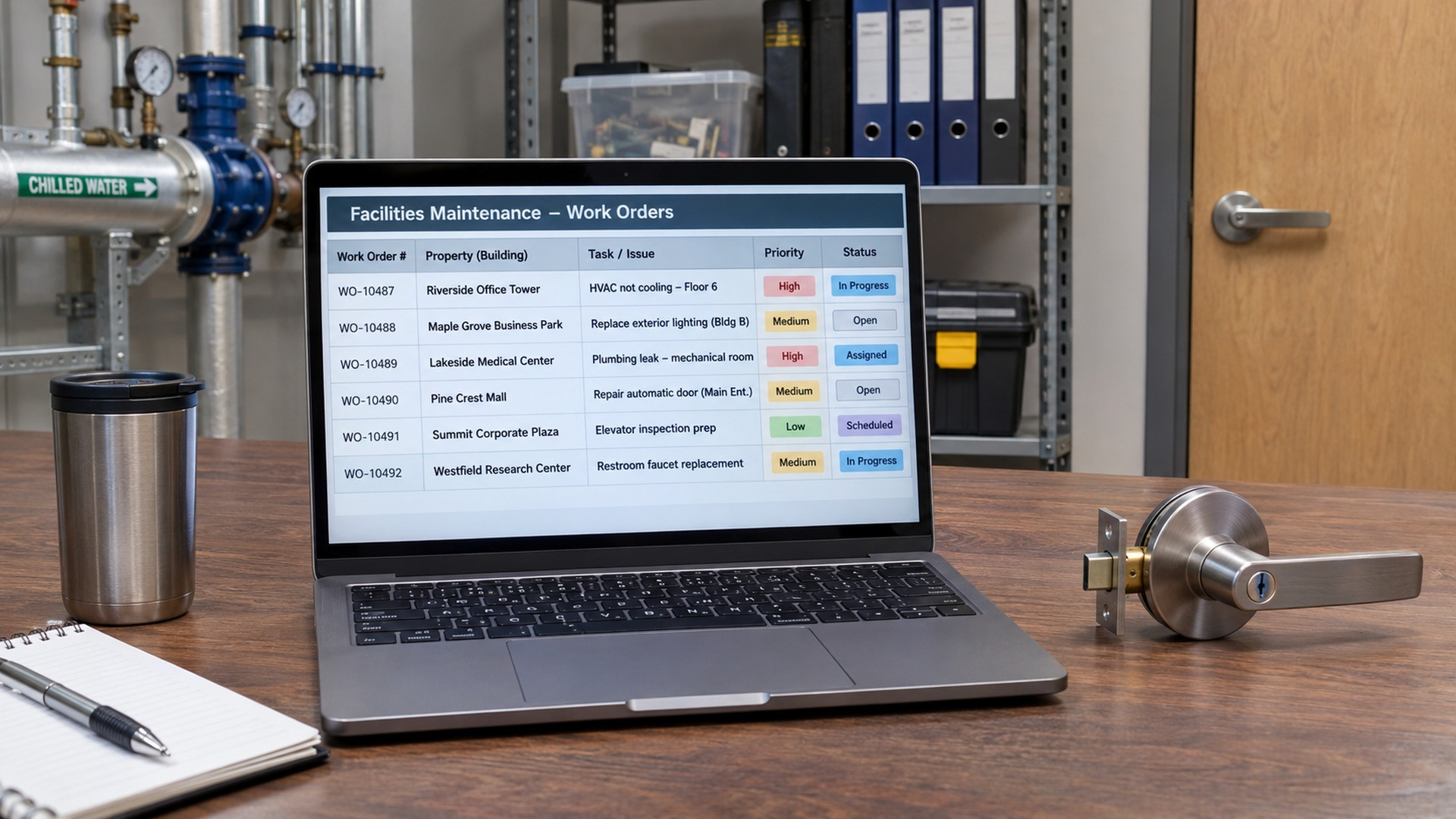
Digital work-order systems can be useful, particularly when several sites and contractors are involved. They can record locations, responsibilities, dates and supporting photographs. But a platform does not by itself determine priorities, approve a repair or ensure that a fault has been correctly diagnosed.
Start with the information the team needs: where the issue is, what was observed, who owns the next action and when the record should be reviewed. A shared spreadsheet may be sufficient for a small portfolio. A larger organisation may need permission controls, reporting and a more structured asset register.
Define an emergency route outside the normal ticket queue. A person reporting an immediate hazard should not be expected to wait for a routine system update. Equally, make sure routine reports receive an acknowledgement so occupants know their concern has not disappeared.
Protect personal and building information. Photographs should avoid confidential screens, personal documents and unnecessary security details. Give access to the people who need it, and plan how records will be exported or handed over if the person administering the system leaves.
Use a portfolio-wide request format
A simple format can make requests easier to compare without forcing every building into the same schedule. Include the property and room, a description of the symptom, the operational effect, when it was noticed, a safe photograph if useful and the person to contact for access.
Add priority and next action after triage. Record whether the matter is an urgent response, planned work or an item to monitor. If a specialist is needed, identify who will arrange that assessment. A shared format makes responsibilities visible without pretending that every defect has the same cause.
For recurring work, link the new request to the previous record. The connection may show that a particular fitting, location or pattern deserves further investigation. It should not automatically be interpreted as proof that the original repair was defective. A new assessment should consider what was previously found and what has changed.
Review the list with local site contacts. Portfolio managers see the broad picture, while occupants and facilities teams experience the building each day. Both perspectives are useful when deciding which items to combine into a planned visit and which need a different response.
Make access part of the scope
A maintenance visit depends on more than the repair. The contractor may need a key, a security induction, an escort or permission to work outside trading hours. The work area may need to be cleared, or a tenant may need advance notice. These details affect whether the visit can be completed efficiently.
Identify the access contact and the person authorised to approve a variation. They may not be the same individual. If a contractor discovers that the substrate behind a fitting is damaged, someone needs to decide whether to approve additional work or arrange a further assessment.
For customer-facing spaces, discuss the operational impact of closing a doorway or taking a room out of service. A phased or after-hours visit may be appropriate, but it can alter the programme and cost. Agree the arrangement before work starts and communicate it to the people using the building.
When a return visit is needed because a part must be sourced, record who will arrange it and whether the area is safe and usable in the meantime. An apparently minor administrative gap can leave a task open longer than the physical repair requires.
A more useful way to think about routine maintenance
The purpose of portfolio maintenance is to keep each property functioning in a way that suits its use. A common reporting format, clear priorities and proportionate records help coordinate that work. Local assessment and the right specialist remain essential where the cause or risk is uncertain.
Commercial Construction provides general maintenance and handyman services. Share the property locations, a list of reported issues and the access constraints to discuss an assessment and an appropriate scope.
Senior Professional
Specialized technical insights from our structural engineering and commercial construction division.