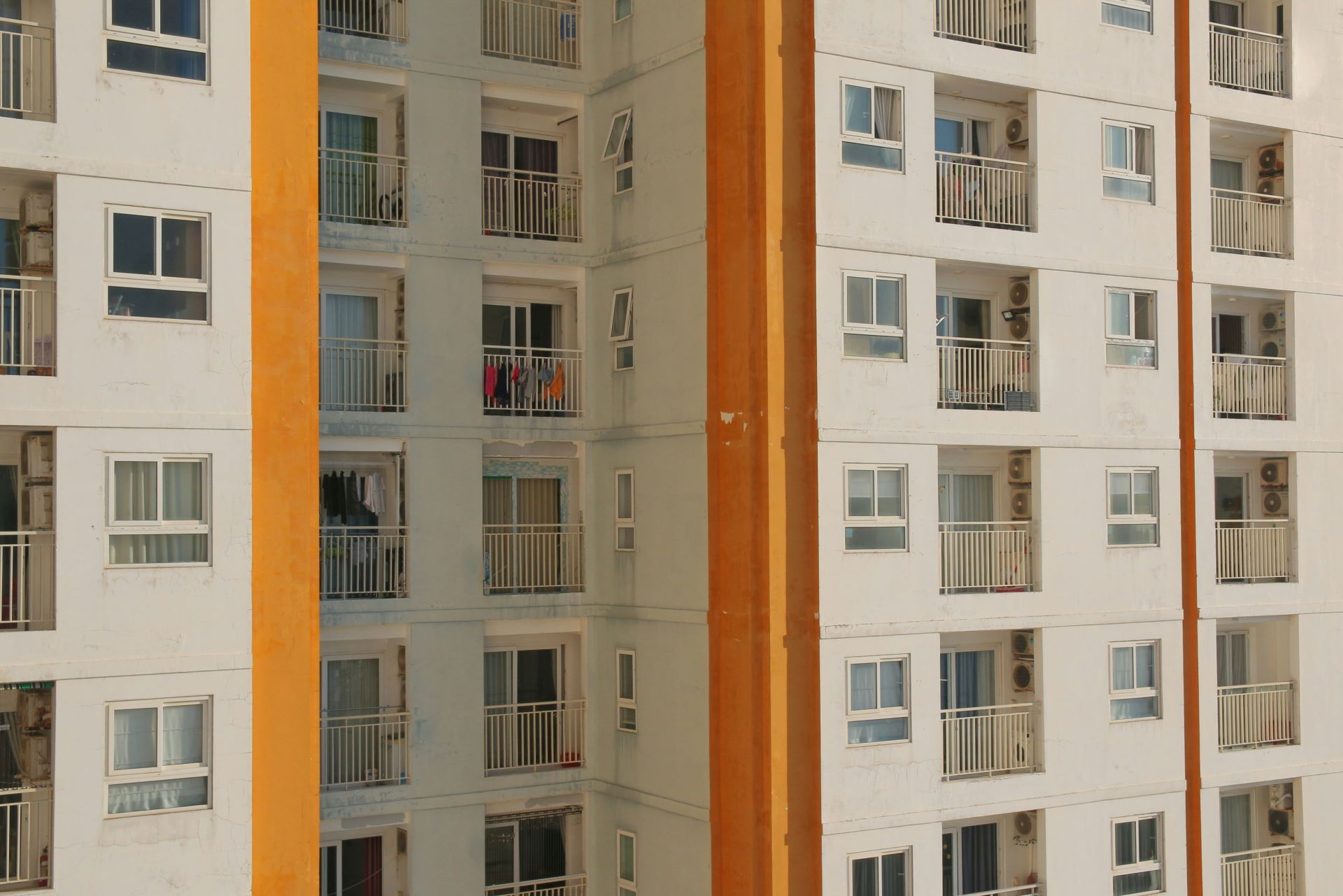
Keeping Multi-Unit Apartment Complexes Well Maintained
Shared Responsibility in Multi-Unit Apartment Living in South Africa
Multi-unit apartment complexes have become an increasingly important part of urban housing across South Africa. As cities grow denser and land becomes more expensive, vertical and semi-vertical living arrangements are steadily replacing traditional standalone housing in many metropolitan areas. These residential ecosystems bring convenience, security and shared infrastructure, but they also introduce a delicate question that lies at the heart of building longevity: who is responsible for what, and when?
Maintaining a multi-unit apartment complex is fundamentally different from maintaining a single-family home. In a standalone property, the homeowner controls every decision about repair schedules, material quality and budgeting priorities. In a shared building, however, maintenance becomes a collective responsibility governed by legal structures, management committees and agreed operational policies. Without coordination, small defects can evolve quietly behind the walls of shared corridors, mechanical rooms and roof cavities until they become expensive structural emergencies.
The philosophy behind good multi-unit maintenance is proactive stewardship rather than reactive repair. When multiple owners share physical infrastructure, a single neglected component can trigger cascading failures across several living units. Water penetration, electrical system degradation and structural movement rarely remain confined to one apartment. Instead, they travel through shared building layers like slow, patient weather systems waiting for the right moment to reveal themselves.
Strata-style maintenance planning offers a structured solution. Borrowed from international models of communal property governance, this approach divides maintenance obligations into predictable cycles, budgetary tiers and technical categories. It allows residents and management bodies to anticipate future costs rather than scrambling to respond when a ceiling begins to stain or a stairwell light fails at night.
The success of shared building maintenance depends not only on technical competence but also on social cooperation. Disagreements about funding, contractor selection and urgency assessment are common. Residents may have different income pressures, risk tolerance levels and expectations of comfort. The role of the building committee is therefore not simply administrative but diplomatic, balancing engineering logic with human practicality.
Understanding the Strata-Style Maintenance Philosophy
Strata-style maintenance is built around the idea that building components age at different speeds. Some parts of a residential complex will require attention every few months, while others can function reliably for decades if protected correctly. Planning maintenance around component life cycles allows apartment complexes to operate more like well-tuned mechanical organisms than like collections of isolated homes stacked on top of each other.
In the context of South Africa, where climate variation ranges from coastal humidity to inland temperature stress, lifecycle planning becomes especially important. Coastal regions experience salt-laden air that accelerates corrosion of metal fixtures, while inland areas often face intense sun exposure that gradually weakens waterproof membranes and roof coatings.
Strata management committees typically maintain a long-term maintenance reserve fund. This fund acts as the financial heartbeat of the building, quietly accumulating resources during good years so that major repair work can be executed without sudden special levies that shock residents.
Predictable maintenance funding reduces social tension inside apartment communities. When residents know that structural care has already been budgeted, they are less likely to resist necessary repairs. Trust grows when financial transparency accompanies technical competence.
One practical strategy is to divide maintenance planning into three overlapping horizons. The short horizon covers emergency repairs such as burst pipes or electrical failures. The medium horizon focuses on annual servicing, sealing work and inspection routines. The long horizon addresses structural integrity, façade protection and major infrastructure replacement.
The challenge is ensuring that these horizons communicate with each other. If short-term repairs are performed poorly, they will contaminate medium-term performance. If long-term planning is ignored, the building slowly slides into a state of managed decay.
Roofing Integrity Across Multi-Unit Buildings
Roofing systems are the most politically sensitive maintenance zones in apartment complexes because their failures affect every resident simultaneously. A roof leak is rarely a private inconvenience. It is a communal storm that begins quietly and ends with water tracing unpredictable paths across ceilings and walls.
In multi-unit complexes across South Africa, roofing structures are exposed to seasonal rainfall patterns that test workmanship quality. Intense winter rainfall in coastal cities often exposes weaknesses in flashing installation, membrane bonding and gutter alignment.
The roof surface should be inspected at least twice annually, preferably before and after the rainy season. Inspection should focus on small defects rather than dramatic failures. Loose fasteners, cracked sealants and displaced tiles are early warning signals that the building’s skin is starting to age unevenly.
Waterproofing membranes deserve special attention because they act as the silent defensive layer between the sky and human comfort. Membranes degrade gradually under ultraviolet exposure and temperature cycling. Even if no visible leak is present, microscopic fatigue can reduce their effectiveness.
Gutter maintenance is often underestimated despite being one of the most cost-effective preventive measures available. Leaves, dust and debris accumulate inside drainage channels, slowing water flow and increasing the risk of overflow during storms. Overflowing gutters can push water back under roofing edges, creating hidden moisture pockets that promote structural deterioration.
The most common mistake in multi-unit buildings is delaying small roof repairs because the defect appears too trivial to justify mobilising contractors. However, roof maintenance follows a strange mathematical logic. The cost of repair tends to grow exponentially the longer a defect is ignored.
Apartment management committees should maintain a relationship with at least two reliable roofing contractors. Competitive quotations help ensure that repair pricing remains realistic while also protecting the building from opportunistic emergency pricing during peak rainy periods.
##Water Infrastructure and Plumbing Coordination
Water delivery and waste removal systems are the circulatory and digestive networks of apartment complexes. When plumbing functions smoothly, residents barely notice its existence. When plumbing fails, discomfort spreads rapidly through social and physical spaces.
Shared plumbing infrastructure presents unique coordination challenges because a blockage or burst pipe in one location can affect multiple apartments simultaneously. Vertical drainage stacks, pressure pumps and concealed pipe networks require professional diagnostic tools rather than visual inspection alone.
In many multi-unit buildings across South Africa, ageing copper or galvanised piping systems are gradually being replaced by modern polymer-based alternatives. Material upgrades should be planned rather than executed reactively after a major failure.
Water pressure management is particularly important in tall apartment blocks. Excessive pressure accelerates wear on joint seals and appliance connections inside individual units. Installing pressure regulation devices at strategic entry points can extend the lifespan of internal plumbing fixtures.
Drain maintenance inside kitchens and bathrooms should be treated as a behavioural and technical issue simultaneously. Residents must understand that certain substances should never enter communal drainage systems.
• Cooking fats, sanitary products and solid waste fragments should be disposed of responsibly rather than flushed.
Periodic professional pipe flushing can remove accumulated sediment that would otherwise restrict flow efficiency over time.
Leak detection technology is becoming more accessible even for mid-sized residential developments. Acoustic sensors and pressure monitoring systems can identify hidden water losses before they manifest as structural staining or mould growth.
Management committees should remember that water loss is not only a maintenance problem but also a financial one. Unnoticed leakage inside shared infrastructure can increase municipal consumption charges, quietly draining the building’s operational budget.
Electrical System Safety in Shared Buildings
Electrical infrastructure is the nervous system of modern apartment living. Lighting, security systems, elevators and communication devices all depend on reliable electrical distribution.
Electrical maintenance must always be performed by certified professionals in accordance with national safety regulations within South Africa. Amateur electrical repairs inside communal systems are not merely risky. They are legally and ethically unacceptable.
Switchboard rooms require controlled environmental conditions. Dust accumulation, moisture penetration and insect infestation can gradually compromise circuit performance. Regular cleaning schedules should be implemented.
Circuit breakers and protective relays should be tested annually. These devices act as guardians that interrupt dangerous current surges before they reach residential units.
Lighting systems in shared corridors, parking areas and stairwells contribute directly to resident safety. Burnt-out bulbs may appear trivial but they reduce nighttime visibility and increase the risk of accidents or security breaches.
Energy efficiency upgrades are becoming common in apartment complexes seeking long-term cost stability. LED lighting installations and smart control systems reduce electrical consumption while improving illumination consistency.
Solar integration is also gaining attention as electricity prices continue to rise across South Africa. However, shared solar systems require careful governance agreements because power generation benefits must be distributed fairly among residents.
Load management is another important consideration. Simultaneous high-demand appliance usage can overload older distribution boards, especially during evening peak periods. Education campaigns inside residential communities can help residents understand how their behaviour affects collective infrastructure.
Structural Integrity and Building Movement Monitoring
Buildings are not static sculptures. They are living constructions that respond slowly to environmental forces such as temperature variation, soil moisture changes and mechanical loading.
Concrete structures in apartment complexes must be monitored for crack development, especially in regions where clay-rich soil dominates the geological profile. Soil moisture fluctuations can cause subtle foundation movement.
Cracks should be classified before repair decisions are made. Hairline surface cracks may require only cosmetic sealing, while structural cracks running through load-bearing elements require engineering assessment.
Water penetration is often the hidden partner of structural decay. When rainwater enters micro-cracks, it expands and contracts with thermal cycles, gradually widening the defect.
Parking basements and ground-level apartments are particularly vulnerable because they sit closer to soil moisture zones. Waterproof coatings and drainage membranes around foundation perimeters help control this risk.
Expansion joints must remain functional rather than being sealed permanently during cosmetic renovations. These joints are designed to absorb building movement energy.
Structural inspections should occur every few years under the supervision of qualified engineers familiar with construction standards in South Africa.
Façade Maintenance and Exterior Surface Protection
The exterior face of an apartment complex is its public personality. Beyond aesthetics, façade maintenance protects internal structures from environmental aggression.
Paint coatings function as the building’s breathable armour. Over time, ultraviolet radiation and rain exposure degrade protective layers, allowing moisture infiltration.
Cracked plaster, peeling paint and bubbling surfaces are early signals that moisture has entered beneath the coating. Repairs should involve surface preparation rather than simple repainting.
Window frames require particular attention because they are common leakage entry points. Sealant materials around frames should be replaced periodically, especially in coastal environments where humidity accelerates material fatigue.
Balconies are high-risk zones in multi-unit buildings because they combine structural load, human activity and exposure to weather. Waterproofing beneath balcony tiles should be inspected every few years.
Cleaning exterior surfaces is not merely cosmetic. Dust and biological growth can retain moisture against walls, slowly weakening plaster bonds.
Security Infrastructure and Shared Technology Maintenance
Modern apartment complexes rely heavily on electronic security networks. Intercoms, access control systems and surveillance cameras form a technological shield around residents.
Security systems must be treated as maintenance assets rather than permanent installations. Software firmware updates, battery replacements and cable integrity checks are necessary.
Entrance gates experience mechanical stress due to frequent usage. Without lubrication and alignment adjustments, gate motors may fail during peak traffic hours.
Backup power systems are especially important in regions where electricity interruptions occur. Battery health monitoring should be part of routine inspection schedules inside multi-unit developments across South Africa.
Data cables running through shared walls and ceilings should be protected against moisture intrusion and physical damage.
Technology upgrades should be planned carefully to avoid compatibility conflicts between old and new systems.
Financial Governance and Maintenance Reserve Planning
Financial discipline determines whether a multi-unit apartment complex thrives or slowly declines into repair chaos.
The maintenance reserve fund should be treated as non-negotiable operational infrastructure. Contributions should be calculated based on building size, age and expected lifecycle replacement schedules.
Emergency maintenance expenditure should be controlled through predefined approval protocols. When emotional urgency overrides technical evaluation, costs tend to escalate.
Transparent reporting builds community trust. Residents are more willing to support levies when they understand how money is being used.
Professional auditing of maintenance accounts helps prevent administrative errors or misuse of funds.
Community Communication and Conflict Management
Human relationships inside apartment complexes can influence physical maintenance outcomes. Technical plans often fail when social cooperation is absent.
Management committees should provide regular maintenance updates to residents. Simple language explanations of technical work reduce anxiety and suspicion.
Residents should be encouraged to report small defects early. A broken corridor light or damp patch should never be ignored because community silence is often the first step toward structural neglect.
Disputes about maintenance costs are inevitable. Structured mediation processes help preserve social harmony while allowing necessary work to proceed.
Building Longevity Through Collective Care
Maintaining multi-unit apartment complexes requires a patient, coordinated philosophy of stewardship. Shared buildings are not simply structures made of concrete, steel and wiring. They are living residential organisms shaped by human cooperation inside South Africa.
Strata-style maintenance planning transforms uncertainty into rhythm. By scheduling inspections, budgeting responsibly and treating infrastructure as a long-term asset, apartment communities can extend building lifespan while protecting resident comfort.
The future of multi-unit living depends on understanding that maintenance is not a cost burden but an investment in social stability and physical safety. When shared responsibility is embraced, apartment complexes become more than housing. They become resilient urban homes that age gracefully under sun, rain and time.
Article Classification
Senior Professional
Specialized technical insights from our structural engineering and commercial construction division.