Early Warning Signs of Structural Failure
The Language of Structural Distress
Buildings rarely collapse without warning. Long before a slab drops or a wall buckles, there are signals. Subtle. Progressive. Often dismissed as cosmetic. Yet in the world of construction and building maintenance, those early indicators are the difference between controlled repair and catastrophic reconstruction.
Concrete, steel, brick and timber do not fail silently. They communicate through movement, cracking, distortion and vibration. The tragedy is not that buildings hide their distress. It is that owners and facility managers often lack the literacy to interpret it.
Structural failure is seldom a singular event. It is typically the final chapter of a story that began months or years earlier. The purpose of proactive maintenance is not simply to fix what is broken. It is to detect deviation from normal behaviour before structural capacity is compromised.
Understanding these early warning signs transforms maintenance from reactive to strategic.
Hairline Cracks: Cosmetic or Structural?
Cracks are the most visible symptom of structural distress. They are also the most misunderstood.
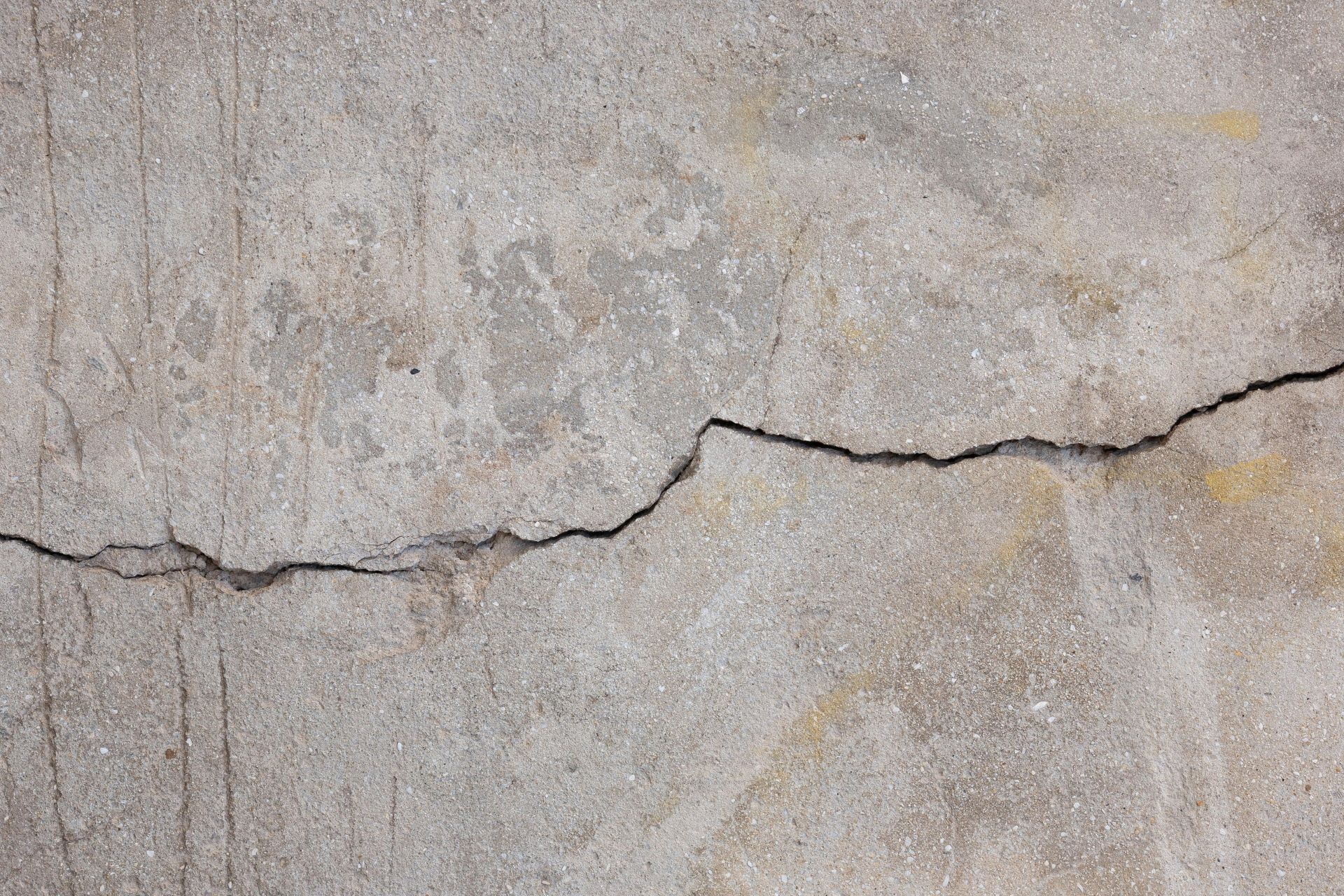
Hairline cracks in plaster are common in new buildings due to shrinkage. Cement-based materials lose moisture during curing, and minor surface fissures may develop. These are usually superficial. However, the width, orientation and progression of a crack determine whether it is benign or a precursor to deeper structural movement.
Vertical cracks in masonry walls can suggest foundation settlement. Diagonal cracks extending from window corners often indicate differential movement, where one part of the structure is shifting relative to another. Horizontal cracks in load-bearing walls are more concerning, as they may signal lateral pressure or structural overload.
The critical factor is progression. A crack that remains stable over time is different from one that widens or extends. Measuring crack width with simple gauges and documenting changes during routine inspections provides valuable data. Even a 1 mm increase over a short period can signify active movement.
In reinforced concrete structures, cracks may also expose steel reinforcement to moisture and oxygen. This initiates corrosion, which expands and exerts internal pressure, further widening the crack. What began as a hairline surface fracture can evolve into structural spalling if left unaddressed.
The visual appearance of a crack is never the entire story. It is a symptom that requires contextual interpretation.
Doors and Windows: The Alignment Test
Doors and windows are practical diagnostic tools embedded in every building. When frames no longer sit square, it often reflects structural movement.
If a door begins to stick at the top corner, it may indicate that the opening has shifted out of alignment. This can be caused by foundation settlement, slab heave or load redistribution within the structure. Windows that are difficult to open or close may suggest torsion or racking of the wall.
These symptoms are particularly important in multi-storey buildings. Uneven load distribution between floors can cause subtle distortions that first manifest as operational difficulty in joinery.
Maintenance teams should not treat recurring door planing or hinge adjustments as routine inconvenience. Repeated misalignment is a structural clue. When several openings on the same elevation exhibit similar distortion, it suggests systemic movement rather than isolated carpentry defects.
In commercial buildings, glazed curtain walls can also reveal distress through seal failure or panel misalignment. Because glazing systems rely on precise tolerances, even minor structural deflection becomes visible through joint separation.
Alignment changes are not merely aesthetic flaws. They are measurable indicators of structural shift.
Floors That Feel Different
Floor performance provides tactile feedback about structural integrity. Excessive deflection, uneven surfaces or perceptible bounce can indicate compromised support systems.
In concrete slab-on-grade construction, differential settlement may create subtle slopes or ridges. Over time, these can evolve into trip hazards and structural cracks. In suspended slabs, increased vibration under normal occupancy loads may signal weakened beams, corroded reinforcement or overstressed connections.
Industrial facilities are especially sensitive to floor movement. Heavy equipment amplifies vibration patterns. If vibration characteristics change over time, it can reflect structural fatigue. Maintenance teams should document baseline vibration levels during commissioning and compare them during periodic assessments.
In steel-framed structures, bolt loosening or connection fatigue may alter floor rigidity. The change is often gradual. Occupants may describe it as a “springy” sensation before any visible damage appears.
The key is familiarity with normal behaviour. Buildings, like machines, have operational signatures. Deviations from those signatures deserve investigation.
The Sound of Movement
Audible cues are frequently ignored. Creaking, popping or grinding sounds can be the acoustic expression of structural stress.
Thermal expansion and contraction naturally produce minor noises, particularly in steel structures. However, persistent or increasing sounds may indicate movement beyond design allowances.
Timber-framed buildings may produce snapping sounds if members are overstressed or if connections loosen. In reinforced concrete, internal cracking may precede visible surface fractures.
Acoustic monitoring technology is increasingly used in high-risk structures such as bridges and high-rise towers. While smaller buildings may not justify advanced monitoring systems, maintenance personnel should document recurring or unusual sounds, especially if correlated with visible symptoms.
Noise is not always structural. Mechanical systems and building services can create similar effects. The challenge is distinguishing between service-related vibration and load-bearing structural distress.
The difference lies in pattern and consistency.
Water Intrusion and Structural Weakening
Water is a silent catalyst in structural failure. While the primary brief focuses on cracks and alignment, moisture infiltration is often the underlying cause of progressive damage.
Leaks through roofs, façades or basement walls introduce moisture into structural components. In concrete, water accelerates reinforcement corrosion. In steel structures, it promotes oxidation. In timber, it leads to rot and loss of load-bearing capacity.
Hairline cracks frequently become pathways for water ingress. Once moisture penetrates, it compromises structural integrity from within. Spalling concrete, rust staining and damp patches are visible indicators of deeper structural processes.
In building maintenance planning, early detection of water ingress should trigger structural evaluation. Waterproofing failures and drainage issues are rarely isolated maintenance concerns. They can initiate a chain reaction that ends in structural degradation.
Moisture mapping and infrared thermography are effective tools in identifying hidden dampness before physical deterioration becomes visible.
Vibration Symptoms in Modern Buildings
Contemporary buildings are lighter and more flexible than older masonry structures. While this improves efficiency and reduces material usage, it also increases sensitivity to vibration.
Occupant complaints about floor vibration, especially in office or residential towers, can indicate structural tuning issues. Resonance occurs when dynamic loads align with a building’s natural frequency. Over time, repeated vibration can fatigue structural connections.
Changes in vibration patterns may result from alterations in occupancy loads, installation of new equipment or removal of structural elements during renovations.
Maintenance professionals should treat persistent vibration complaints as diagnostic opportunities rather than comfort issues alone. Structural engineers can conduct modal analysis to determine whether the building’s dynamic performance has shifted.
Monitoring vibration is particularly important in facilities near heavy traffic, rail lines or industrial zones. External dynamic loads can exacerbate existing weaknesses.
Foundation Settlement: The Hidden Driver
Many visible structural symptoms trace back to foundation movement. Soil conditions, drainage patterns and load distribution all influence foundation stability.
Differential settlement occurs when one portion of the foundation sinks more than another. This creates stress within walls and slabs, resulting in cracks and misalignment.
Expansive clay soils can cause heave during wet seasons and shrinkage during dry periods. Buildings constructed without adequate soil investigation are especially vulnerable.
Routine inspection of perimeter walls, slab edges and retaining structures helps identify early settlement indicators. Cracks radiating from corners, separation between walls and floors, or gaps around skirting boards may signal movement at the foundation level.
Foundation issues rarely correct themselves. Early geotechnical assessment can prevent escalating structural damage.
Monitoring and Documentation Practices
Detecting early signs of structural failure requires structured observation. Casual visual inspection is insufficient.
Building maintenance teams should establish inspection schedules tailored to structural type and occupancy load. Documentation must include photographs, crack measurements and location mapping.
Digital tools now allow for longitudinal tracking of structural indicators. Comparing data over time reveals trends that isolated observations cannot.
Engaging structural engineers for periodic assessments adds professional oversight. Particularly in older buildings or those with heavy operational demands, formal structural audits provide baseline data for risk management.
Preventive maintenance budgets often compete with other operational priorities. However, the cost of early investigation is negligible compared to large-scale structural remediation.
When to Escalate Concerns
Not every crack demands structural intervention. The challenge lies in distinguishing between superficial defects and structural red flags.
Rapid crack progression, multiple cracks forming in a pattern, door and window distortion across several floors, persistent vibration increase and visible deflection of beams or slabs warrant immediate professional evaluation.
Occupant safety is paramount. Temporary shoring, load reduction or area restriction may be necessary until structural integrity is verified.
Delaying assessment can convert manageable repair into emergency response. Structural failure is rarely spontaneous. It is usually the cumulative result of ignored warning signs.
The Strategic Value of Early Detection
Early detection of structural distress extends beyond safety. It preserves asset value.
Commercial property owners rely on structural stability to maintain tenant confidence and insurance compliance. Even minor visible defects can influence property valuation if perceived as structural risk.
Proactive identification and correction of early warning signs demonstrate responsible asset stewardship. It reduces lifecycle costs and enhances long-term performance.
Buildings are long-term investments. Their durability depends not only on design and construction quality but on vigilant maintenance.
Listening Before the Scream
The premise remains simple. Buildings whisper before they scream.
Hairline cracks, misaligned doors, subtle vibrations and faint structural sounds are not isolated inconveniences. They are part of a communication system embedded in every structure.
Construction and maintenance professionals who cultivate sensitivity to these signals can intervene early, control costs and prevent catastrophic failure.
Structural failure is not inevitable. It is often preventable through attentive observation, disciplined documentation and timely expert consultation.
In the built environment, silence is not safety. Vigilance is.
Article Classification
Senior Professional
Specialized technical insights from our structural engineering and commercial construction division.