Balcony and Deck Safety Risks Often Overlooked
Balconies and decks sit quietly at the edge of our buildings, often treated as lifestyle luxuries rather than structural components carrying real risk. In South Africa’s diverse climate, where coastal salt, inland heat and seasonal rainfall all exert their own forms of pressure, these spaces are exposed to a relentless cycle of expansion, contraction, moisture ingress and material fatigue. What makes them particularly dangerous is not their visibility, but the illusion of safety they project. A tiled surface may appear flawless while hidden supports slowly deteriorate beneath, turning what should be a place of relaxation into a potential point of failure.
For property owners, developers and maintenance teams, balcony and deck safety checks should not be reactive measures triggered by visible damage. They need to be embedded into routine building inspections, treated with the same seriousness as foundations or roofing systems. The challenge lies in understanding where the real risks hide, because in most cases, the most dangerous defects are not immediately obvious.
Understanding Structural Load and Design Limitations
Every balcony and deck is designed with a specific load capacity, calculated based on anticipated use, material strength and structural support. Over time, however, actual usage often diverges from these assumptions. In residential settings, balconies become storage spaces for heavy planters, water features or enclosed extensions that were never accounted for in the original design. In commercial environments, foot traffic can exceed expected limits during peak periods, placing sustained stress on structural elements.
South African construction standards provide clear guidance on load-bearing requirements, yet enforcement and long-term compliance can vary widely, particularly in older buildings. When a structure is pushed beyond its intended limits, the stress does not always manifest immediately. Instead, it accumulates gradually, leading to micro-fractures, deflection in beams, and weakening of connections. By the time visible sagging or cracking appears, the structural integrity may already be compromised.
Routine inspections must therefore consider not only the physical condition of the structure but also how it is being used. A balcony that was designed for occasional occupancy but is now regularly hosting gatherings represents a fundamentally different risk profile.
The Hidden Threat of Water Ingress
Water is perhaps the most persistent and underestimated enemy of balcony and deck structures. In many South African buildings, waterproofing systems are installed beneath tiled or finished surfaces, creating a protective barrier that is largely invisible once construction is complete. Over time, however, this barrier can fail due to poor installation, material degradation or mechanical damage.
When waterproofing fails, water begins to seep into the structural layers below. In reinforced concrete balconies, this leads to corrosion of steel reinforcement, a process that expands the metal and causes internal pressure that cracks the surrounding concrete. These cracks then allow more water to enter, accelerating the cycle of deterioration. The surface may still appear intact, but beneath it, the structure is slowly being hollowed out.
In timber decks, water ingress results in rot, fungal growth and eventual loss of load-bearing capacity. Coastal regions such as Durban and Cape Town are particularly vulnerable due to high humidity and salt exposure, which further accelerates material breakdown.
Regular inspection of drainage systems, sealants and surface finishes is essential, but it is equally important to recognise the limitations of visual checks. In many cases, invasive testing or moisture detection tools are required to identify hidden damage before it becomes critical.
Corrosion and Material Degradation in Coastal and Inland Environments
South Africa’s environmental diversity plays a significant role in how balcony and deck materials age. Coastal areas introduce salt-laden air that aggressively corrodes metal components, including balustrades, fixings and reinforcement bars. Even stainless steel, often considered resistant, can suffer from pitting corrosion if not properly specified or maintained.
Inland regions present a different set of challenges. High UV exposure degrades protective coatings, causing sealants to become brittle and lose their effectiveness. Temperature fluctuations between hot days and cool nights create repeated expansion and contraction cycles, which stress joints and connections over time.
Material selection during construction is only part of the equation. Without ongoing maintenance, even the most robust systems will eventually degrade. Protective coatings must be reapplied, metal components inspected for early signs of corrosion, and any compromised elements replaced before they affect the overall stability of the structure.
Balustrades and Guardrails: The Illusion of Security
Balustrades and guardrails are often perceived as secondary features, yet they serve a critical safety function. In many cases, failures occur not because the main structure collapses, but because these protective barriers give way under pressure. This is particularly concerning in high-rise residential and commercial buildings, where a fall from height carries severe consequences.
Common issues include loose fixings, corrosion at connection points, and inadequate anchoring into the supporting structure. Glass balustrades, increasingly popular in modern developments, introduce additional risks if not properly installed. Laminated glass may appear strong, but if the interlayer is compromised or the mounting system fails, the entire assembly can become unstable.
Routine checks should involve physical testing of balustrades to ensure they can withstand applied force, rather than relying solely on visual inspection. Any movement or instability should be treated as a warning sign requiring immediate attention.
Drainage Failures and Their Structural Consequences
Effective drainage is fundamental to the longevity of balconies and decks, yet it is frequently overlooked during both construction and maintenance. Blocked outlets, insufficient slope and poorly designed drainage systems can result in water pooling on the surface. Over time, this standing water finds its way into joints, cracks and porous materials, initiating the same cycle of deterioration associated with waterproofing failure.
In South African conditions, where sudden heavy rainfall events are common, drainage systems must be capable of handling large volumes of water within a short period. When they fail to do so, the consequences extend beyond surface damage. Prolonged saturation increases the load on the structure, exacerbates corrosion and accelerates the breakdown of materials.
Maintenance teams should prioritise regular clearing of drainage outlets and ensure that surface gradients remain effective. Any signs of water pooling after rainfall should be investigated as a potential indicator of deeper issues.
The Risk of Poor Repairs and Unregulated Alterations
One of the most significant risks in balcony and deck safety arises not from the original construction, but from subsequent repairs and alterations. In many cases, property owners undertake renovations without fully understanding the structural implications. Adding new finishes, enclosing balconies or installing heavy fixtures can alter load distribution and compromise existing systems.
Poorly executed repairs can be equally problematic. Applying new tiles over a failing waterproofing system may temporarily improve appearance but does nothing to address the underlying issue. In fact, it can trap moisture within the structure, accelerating deterioration.
In South Africa, where informal construction practices are not uncommon, the lack of regulatory oversight in some cases increases the likelihood of such problems. Engaging qualified professionals for any structural work is essential, not only to ensure compliance with building standards but also to protect the long-term integrity of the structure.
Timber Decking: Aesthetic Appeal with Structural Responsibilities
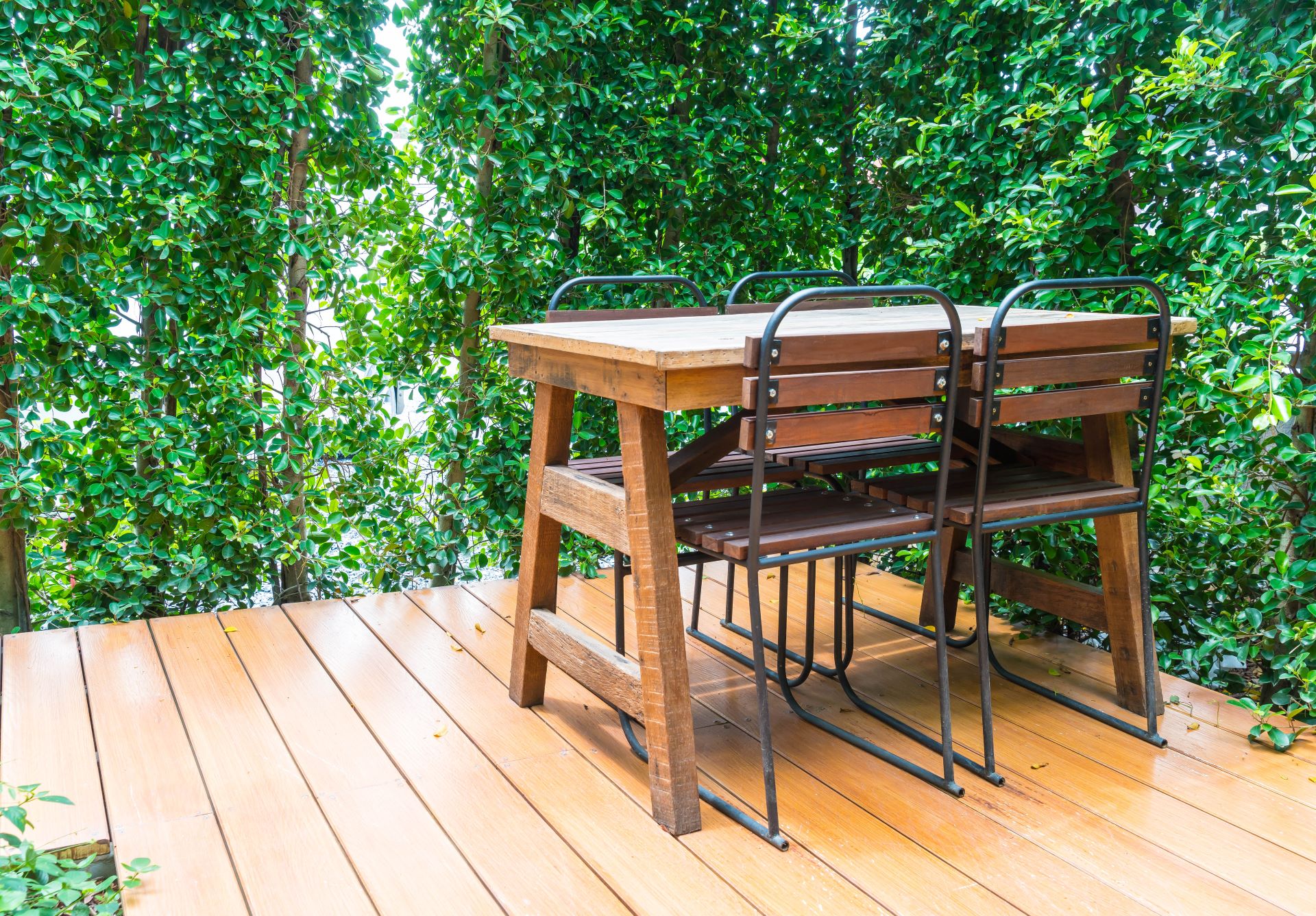
Timber decks remain a popular choice for residential properties, offering warmth and natural appeal. However, they require a level of maintenance that is often underestimated. Unlike concrete structures, timber is inherently vulnerable to biological and environmental factors, including moisture, insects and UV exposure.
Over time, untreated or poorly maintained timber can develop rot, reducing its strength and stability. Fasteners may loosen as the wood expands and contracts, creating movement within the structure. In severe cases, entire sections of decking can become unsafe without obvious warning signs.
Regular sealing, treatment and inspection are essential to extend the lifespan of timber decks. Particular attention should be paid to areas where wood comes into contact with the ground or other surfaces, as these are most susceptible to moisture accumulation.
Concrete Spalling and Reinforcement Exposure
Concrete balconies are often perceived as durable and low-maintenance, yet they are not immune to deterioration. One of the most common issues is spalling, where sections of concrete break away from the surface, exposing the steel reinforcement within. This is typically caused by corrosion of the reinforcement, which expands and creates internal pressure.
Spalling is not merely a cosmetic issue. Once the reinforcement is exposed, it becomes increasingly vulnerable to environmental factors, accelerating the rate of deterioration. The loss of concrete cover also reduces the structural capacity of the element, potentially leading to failure under load.
Early detection and repair are critical. Small areas of spalling can often be addressed effectively, but widespread damage may require more extensive intervention, including partial reconstruction.
Movement, Expansion and Structural Fatigue
All building materials expand and contract in response to temperature changes, and balconies and decks are particularly exposed to these fluctuations. Over time, this movement can lead to fatigue in joints, fixings and structural connections. Expansion joints, designed to accommodate this movement, may themselves deteriorate or become ineffective if not properly maintained.
In South Africa’s climate, where temperature variations can be significant, the cumulative effect of this movement should not be underestimated. Cracks that appear minor may in fact be indicators of ongoing structural stress. Monitoring these changes over time provides valuable insight into the health of the structure.
Inspection Practices and Preventative Maintenance
Effective balcony and deck safety management relies on a proactive approach to inspection and maintenance. This involves not only identifying existing defects but also anticipating potential issues based on environmental conditions, usage patterns and material performance.
Inspections should be carried out at regular intervals, with more frequent checks in high-risk environments such as coastal areas. While visual assessments are a useful starting point, they should be complemented by more detailed investigations where necessary. This may include moisture testing, structural analysis and, in some cases, destructive testing to assess internal conditions.
Preventative maintenance is often more cost-effective than reactive repairs. Addressing minor issues early can prevent them from developing into major structural problems, reducing both financial risk and safety concerns.
Legal and Liability Considerations in South Africa
Property owners and managers in South Africa have a legal responsibility to ensure that their buildings are safe for occupants and visitors. Failure to maintain balconies and decks can result in significant liability, particularly in the event of an accident or structural failure.
Building regulations and standards provide a framework for safety, but compliance is an ongoing obligation rather than a one-time requirement. Regular inspections, proper documentation and timely maintenance are essential components of risk management.
In sectional title schemes and commercial properties, the responsibility for maintenance may be shared among multiple parties, making clear communication and defined roles critical. Neglect in one area can have far-reaching consequences, affecting not only the immediate structure but also adjacent units and shared spaces.
Seeing Beyond the Surface
Balconies and decks may appear simple, but they are complex systems where structural integrity, environmental exposure and human use intersect. The greatest risks are often those that remain hidden, quietly developing beneath the surface until they reach a critical point.
In the South African context, where environmental conditions vary widely and maintenance practices are not always consistent, a proactive and informed approach is essential. Regular inspections, proper maintenance and an understanding of the underlying risks can transform these spaces from potential hazards into safe, enduring features of the built environment.
Ultimately, balcony and deck safety is not about reacting to visible damage, but about anticipating and addressing the unseen forces that shape the lifespan of these structures. Those who take the time to look deeper will not only protect their investments but also ensure the safety of those who use these spaces every day.
Article Classification
Senior Professional
Specialized technical insights from our structural engineering and commercial construction division.